
Much of Atlanta sits on Piedmont red clay, which has high shrink–swell capacity and low permeability. When saturated, this soil expands and increases lateral pressure against retaining walls. Poor drainage in clay-heavy soils is a primary contributor to wall bowing and structural failure.
In many U.S. jurisdictions, including areas within Fulton and DeKalb Counties, retaining walls over four feet in height typically require engineered plans and permits. This requirement exists because taller walls must be designed to resist calculated lateral earth pressures and hydrostatic loads.
Industry data and structural assessments consistently show that inadequate drainage, not block strength, is the most common cause of retaining wall failure. Without gravel backfill, perforated pipe, and proper water discharge, hydrostatic pressure builds behind the wall and can lead to cracking, tilting, or collapse.
Retaining wall cost in Atlanta right now is determined by structural engineering requirements, red clay soil behavior, slope geometry, drainage performance, and local permitting standards within Fulton County and DeKalb County. In most residential areas across Buckhead 30327, Brookhaven 30319, Druid Hills 30306, Morningside 30306, and Sandy Springs, professionally engineered retaining walls range between $85 and $180 per square foot. Properties with significant elevation change near Chastain Park, Piedmont Park, the Atlanta BeltLine, Bobby Jones Golf Course, and the wooded slopes of Vinings frequently exceed that range due to reinforcement depth and hydrostatic pressure management.
Many homeowners searching for retaining wall contractors in Atlanta initially compare block pricing. In Atlanta's Piedmont region, that approach ignores the dominant cost drivers: expansive red clay, high annual rainfall, drainage runoff patterns, and the structural demands required to resist lateral earth pressure.
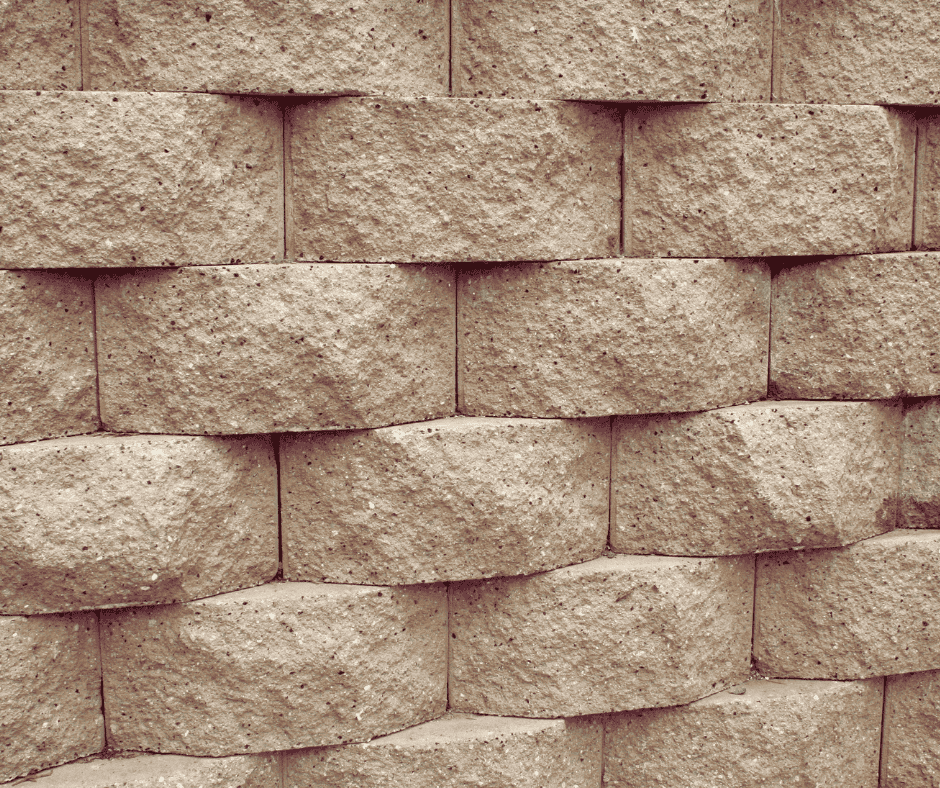
Atlanta is built on rolling Piedmont topography. The soil composition across 30305, 30327, 30342, and surrounding zip codes consists largely of dense red clay with low permeability and significant shrink-swell characteristics. When saturated during heavy North Georgia rainfall events, this clay expands and increases lateral earth pressure behind retaining structures.
Hydrostatic pressure develops when water accumulates in the retained soil mass without adequate drainage relief. Because clay does not drain quickly, pressure remains sustained. Unlike sandy soils where water disperses more rapidly, Atlanta's clay profile maintains force against the wall for extended periods.
This sustained pressure explains why non-engineered timber walls and shallow block installations frequently bow or tilt in neighborhoods such as Virginia-Highland, Ansley Park, Garden Hills, and Inman Park.
Structural retaining walls in Atlanta must be designed to resist active earth pressure generated by soil weight and water saturation. Engineering calculations evaluate soil unit weight, internal friction angle, surcharge loads from driveways or structures, and hydrostatic contribution.
Walls exceeding four feet in height typically require engineered drawings and permit approval within Fulton County and DeKalb County jurisdictions. Design considerations include footing embedment depth, rebar spacing, geogrid reinforcement intervals, and allowable bearing pressure of subgrade soil.
In 30327 Buckhead hillside properties, surcharge loads from adjacent driveways or elevated patios increase design complexity. In Brookhaven 30319 and Sandy Springs, slope transitions demand deeper geogrid embedment lengths.
Retaining wall cost varies by structural type and reinforcement strategy:
Segmental Retaining Wall systems from Belgard, Keystone Retaining Wall Systems, Allan Block, and Pavestone dominate residential construction across Decatur, Dunwoody, Roswell, and Marietta. These systems rely on geogrid reinforcement extending into the retained soil mass. The geogrid layers create tensile resistance by binding soil and block into a composite structural system.
Luxury properties near the Swan House and Ansley Park estates often integrate Natural Fieldstone, Bluestone coping, Granite Rubble facings, or Rosetta Hardscapes textures. These finishes elevate aesthetics while the structural integrity depends on engineered backing systems.
Drainage is the primary failure point in Atlanta retaining walls. A properly engineered system includes perforated pipe installed at base elevation, surrounded by washed gravel backfill, separated by filter fabric to prevent clay infiltration. Weep holes provide supplemental pressure release.
Without gravel backfill, water becomes trapped. Without filter fabric, clay particles migrate and clog drainage pipe. Without proper slope on perforated pipe, water accumulates behind the wall. Each deficiency increases hydrostatic pressure.
Heavy rainfall events across North Georgia frequently deliver several inches of precipitation in short periods. In neighborhoods bordering the Atlanta BeltLine or Piedmont Park, runoff intensity increases due to surrounding hardscape surfaces. Retaining walls in these areas must be designed to handle concentrated water flow.
Wall bowing indicates lateral earth pressure exceeding structural resistance. Horizontal cracking along mortar joints suggests tensile failure. Forward tilting indicates footing instability or insufficient embedment depth.
Timber railroad tie walls, common in older Buckhead and Decatur properties, often deteriorate within 10–15 years due to moisture exposure and clay expansion. Deadman anchors lose resistance as soil shifts.
Mudslides in Dunwoody, Roswell, and hillside Vinings properties demonstrate slope instability rather than surface aesthetic failure. Retaining walls in these zones must function as structural stabilization systems.
Steep wooded properties near Chastain Park Amphitheatre or along 30327 ridgelines require staged excavation. Mini excavators provide access to confined rear yards in 30305 and 30306. Skid steers manage soil relocation. Plate compactors and vibratory rollers ensure compaction density meets engineering standards.
Laser levels and transit levels establish precise elevation alignment across long wall runs. Improper grade results in uneven load distribution and stress concentration.
Each component directly mitigates measurable forces within Atlanta’s clay-based environment.
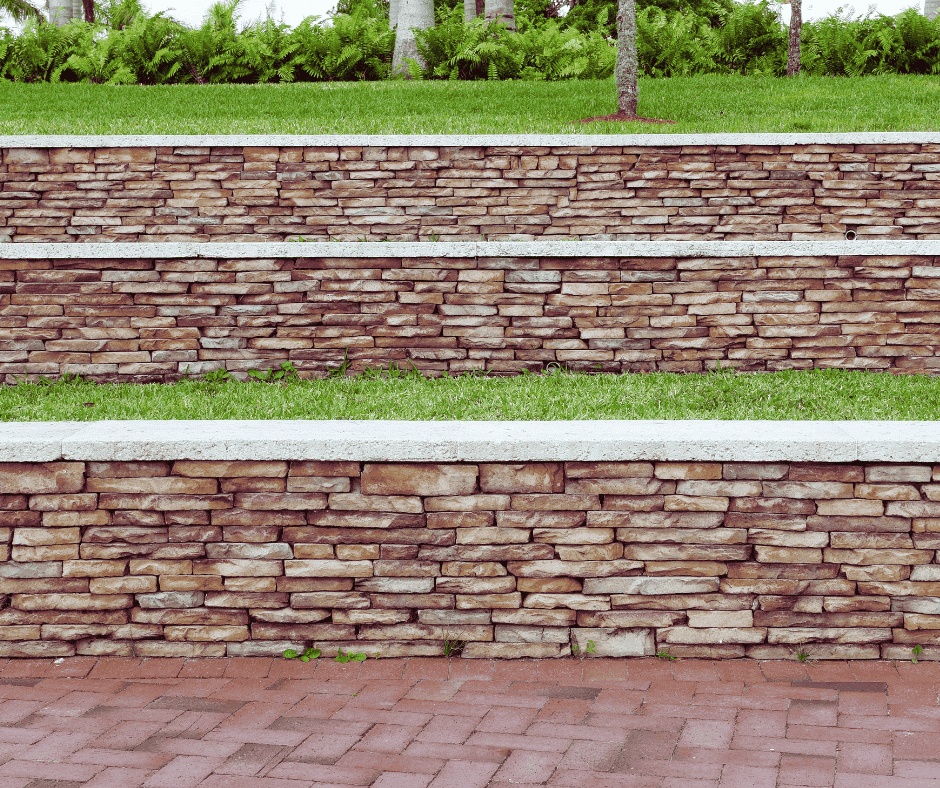
A four-foot engineered Segmental Retaining Wall in Brookhaven 30319 with moderate slope and integrated drainage may range between $25,000 and $35,000 depending on length and access.
An eight-foot reinforced wall in Buckhead 30327 requiring multiple geogrid layers and deep footings may range from $60,000 to $90,000.
Multi-tier installations overlooking the Atlanta BeltLine or properties near Bobby Jones Golf Course frequently exceed $100,000 due to excavation staging, reinforcement length, and runoff management.
Commercial Redi-Rock systems near Marietta or GADOT-influenced corridors require structural compliance and heavy equipment mobilization.

Engineered retaining walls protect foundations, reduce soil erosion, and create usable land area on sloped properties. In competitive real estate markets such as Buckhead, Druid Hills, and Ansley Park, documented structural compliance contributes to buyer confidence.
Inspection reports frequently reference retaining wall condition when evaluating hillside homes in 30327 and 30305. Properly engineered systems reduce risk exposure and maintenance uncertainty.
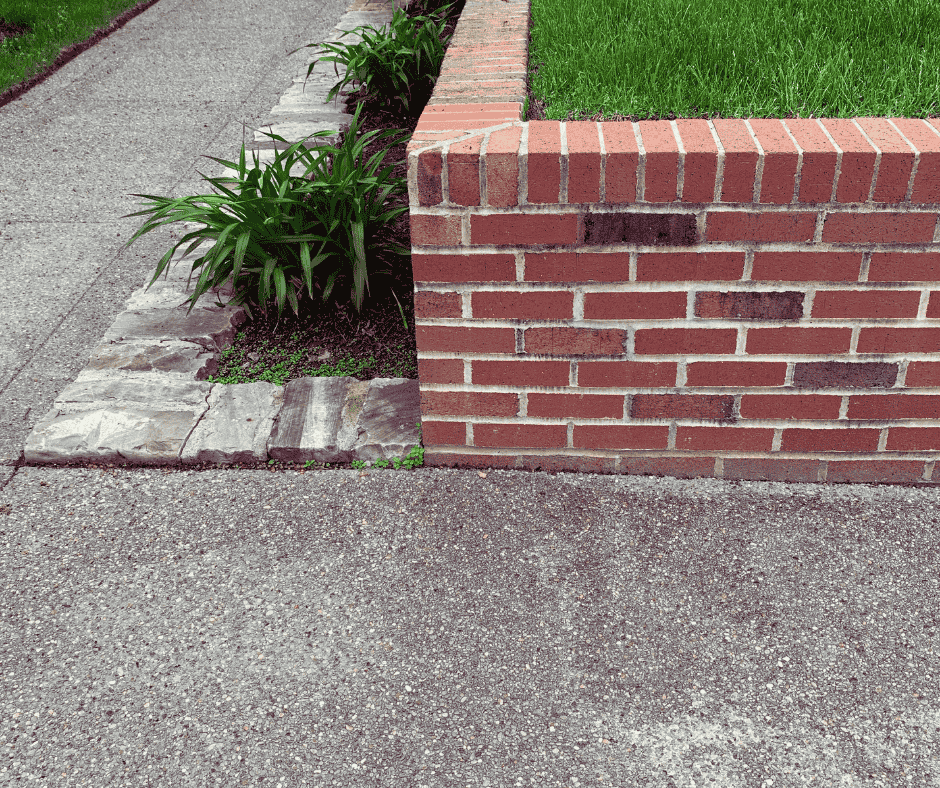
Accurate cost evaluation begins with structural site assessment retaining wall contractors in Atlanta must analyze slope angle, soil composition, drainage flow patterns, and reinforcement depth prior to final design.
Licensed General Contractors operating within Fulton County and DeKalb County coordinate engineering oversight to ensure compliance with local building codes and safety standards.
Heide Contracting specializes in engineered retaining wall construction, erosion control, grading, and slope stabilization across Buckhead, Brookhaven, Decatur, Sandy Springs, Vinings, Roswell, Dunwoody, and Marietta. Structural evaluations determine appropriate wall type, geogrid embedment, drainage configuration, and footing design.
Homeowners observing wall bowing, soil erosion, drainage runoff, or foundation pressure benefit from early structural evaluation. A professional assessment clarifies reinforcement requirements and long-term cost expectations.
Retaining wall cost in Atlanta ultimately reflects soil mechanics, hydrostatic pressure control, structural design depth, and drainage engineering. When those variables are addressed with precision, the retaining wall performs as permanent structural infrastructure within Atlanta’s demanding Piedmont terrain.
Redirect to:
|
This page is a redirect. The following categories are used to track and monitor this redirect:
|

Retaining walls are relatively rigid walls used for supporting soil laterally so that it can be retained at different levels on the two sides. Retaining walls are structures designed to restrain soil to a slope that it would not naturally keep to (typically a steep, near-vertical or vertical slope). They are used to bound soils between two different elevations often in areas of inconveniently steep terrain in areas where the landscape needs to be shaped severely and engineered for more specific purposes like hillside farming or roadway overpasses. A retaining wall that retains soil on the backside and water on the frontside is called a seawall or a bulkhead.
A retaining wall is designed to hold in place a mass of earth or the like, such as the edge of a terrace or excavation. The structure is constructed to resist the lateral pressure of soil when there is a desired change in ground elevation that exceeds the angle of repose of the soil.[1]
A basement wall is thus one kind of retaining wall; however, the term usually refers to a cantilever retaining wall, which is a freestanding structure without lateral support at its top.[2] These are cantilevered from a footing and rise above the grade on one side to retain a higher level grade on the opposite side. The walls must resist the lateral pressures generated by loose soils or, in some cases, water pressures.[3]

Every retaining wall supports a "wedge" of soil. The wedge is defined as the soil which extends beyond the failure plane of the soil type present at the wall site, and can be calculated once the soil friction angle is known. As the setback of the wall increases, the size of the sliding wedge is reduced. This reduction lowers the pressure on the retaining wall.[4]
The most important consideration in proper design and installation of retaining walls is to recognize and counteract the tendency of the retained material to move downslope due to gravity. This creates lateral earth pressure behind the wall which depends on the angle of internal friction (phi) and the cohesive strength (c) of the retained material, as well as the direction and magnitude of movement the retaining structure undergoes.
Lateral earth pressures are zero at the top of the wall and – in homogeneous ground – increase proportionally to a maximum value at the lowest depth. Earth pressures will push the wall forward or overturn it if not properly addressed. Also, any groundwater behind the wall that is not dissipated by a drainage system causes hydrostatic pressure on the wall. The total pressure or thrust may be assumed to act at one-third from the lowest depth for lengthwise stretches of uniform height.[5]
It is important to have proper drainage behind the wall in order to limit the pressure to the wall's design value. Drainage materials will reduce or eliminate the hydrostatic pressure and improve the stability of the material behind the wall. Drystone retaining walls are normally self-draining.
As an example, the International Building Code requires retaining walls to be designed to ensure stability against overturning, sliding, excessive foundation pressure and water uplift; and that they be designed for a safety factor of 1.5 against lateral sliding and overturning.[6]


Gravity walls depend on their mass (stone, concrete or other heavy material) to resist pressure from behind and may have a 'batter' setback to improve stability by leaning back toward the retained soil. For short landscaping walls, they are often made from mortarless stone or segmental concrete units (masonry units).[7] Dry-stacked gravity walls are somewhat flexible and do not require a rigid footing. They can be built to a low height without additional materials being inserted, and have concrete added for strength and stability. [8]
Earlier in the 20th century, taller retaining walls were often gravity walls made from large masses of concrete or stone. Today, taller retaining walls are increasingly built as composite gravity walls such as: geosynthetics such as geocell cellular confinement earth retention or with precast facing; gabions (stacked steel wire baskets filled with rocks); crib walls (cells built up log cabin style from precast concrete or timber and filled with granular material).[9]
Cantilevered retaining walls are made from an internal stem of steel-reinforced, cast-in-place concrete or mortared masonry (often in the shape of an inverted T). These walls cantilever loads (like a beam) to a large, structural footing, converting horizontal pressures from behind the wall to vertical pressures on the ground below. Sometimes cantilevered walls are buttressed on the front, or include a counterfort on the back, to improve their strength resisting high loads. Buttresses are short wing walls at right angles to the main trend of the wall. These walls require rigid concrete footings below seasonal frost depth. This type of wall uses much less material than a traditional gravity wall.
Diaphragm walls are a type of retaining walls that are very stiff and generally watertight. Diaphragm walls are expensive walls, but they save time and space, and hence are used in urban constructions.[10]

Sheet pile retaining walls are usually used in soft soil and tight spaces. Sheet pile walls are driven into the ground and are composed of a variety of material including steel, vinyl, aluminum, fiberglass or wood planks. For a quick estimate the material is usually driven 1/3 above ground, 2/3 below ground, but this may be altered depending on the environment. Taller sheet pile walls will need a tie-back anchor, or "dead-man" placed in the soil a distance behind the face of the wall, that is tied to the wall, usually by a cable or a rod. Anchors are then placed behind the potential failure plane in the soil.

Bored pile retaining walls are built by assembling a sequence of bored piles, followed by excavating away the excess soil. Depending on the project, the bored pile retaining wall may include a series of earth anchors, reinforcing beams, soil improvement operations and shotcrete reinforcement layer. This construction technique tends to be employed in scenarios where sheet piling is a valid construction solution, but where the vibration or noise levels generated by a pile driver are not acceptable.

An anchored retaining wall can be constructed in any of the aforementioned styles but also includes additional strength using cables or other stays anchored in the rock or soil behind it. Usually driven into the material with boring, anchors are then expanded at the end of the cable, either by mechanical means or often by injecting pressurized concrete, which expands to form a bulb in the soil. Technically complex, this method is very useful where high loads are expected, or where the wall itself has to be slender and would otherwise be too weak.
Soil nailing is a technique in which soil slopes, excavations or retaining walls are reinforced by the insertion of relatively slender elements – normally steel reinforcing bars. The bars are usually installed into a pre-drilled hole and then grouted into place or drilled and grouted simultaneously. They are usually installed untensioned at a slight downward inclination. A rigid or flexible facing (often sprayed concrete) or isolated soil nail heads may be used at the surface.
A number of systems exist that do not consist of just the wall, but reduce the earth pressure acting directly on the wall. These are usually used in combination with one of the other wall types, though some may only use it as facing, i.e., for visual purposes.

This type of soil strengthening, often also used without an outside wall, consists of wire mesh "boxes", which are filled with roughly cut stone or other material. The mesh cages reduce some internal movement and forces, and also reduce erosive forces. Gabion walls are free-draining retaining structures and as such are often built in locations where ground water is present. However, management and control of the ground water in and around all retaining walls is important.
Mechanically stabilized earth, also called MSE, is soil constructed with artificial reinforcing via layered horizontal mats (geosynthetics) fixed at their ends. These mats provide added internal shear resistance beyond that of simple gravity wall structures. Other options include steel straps, also layered. This type of soil strengthening usually needs outer facing walls (S.R.W.'s – Segmental Retaining Walls) to affix the layers to and vice versa.[11]
The wall face is often of precast concrete units[7] that can tolerate some differential movement. The reinforced soil's mass, along with the facing, then acts as an improved gravity wall. The reinforced mass must be built large enough to retain the pressures from the soil behind it. Gravity walls usually must be a minimum of 50 to 60 percent as deep or thick as the height of the wall, and may have to be larger if there is a slope or surcharge on the wall.
Cellular confinement systems (geocells) are also used for steep earth stabilization in gravity and reinforced retaining walls with geogrids. Geocell retaining walls are structurally stable under self- weight and externally imposed loads, while the flexibility of the structure offers very high seismic resistance.[12] The outer fascia cells of the wall can be planted with vegetation to create a green wall.

| Investigation and instrumentation |
|
||||||
|---|---|---|---|---|---|---|---|
| Soil |
|
||||||
| Structures (Interaction) |
|
||||||
| Mechanics |
|
||||||
| Numerical analysis software |
|||||||
| Related fields | |||||||
| International | |
|---|---|
| National | |
| Other | |


